
Why More Los Angeles Homeowners Are Switching to Eco-Friendly Pressure Washing
A couple in a home windows seeing the garden
Los Angeles homes work hard. Salt air rolls in from Malibu and Santa Monica, dust and pollen settle fast in the dry season, and the relentless Southern California sun bakes grime into driveways, siding, and stone until it looks like part of the surface. Most homeowners solve this the same way: they call the first pressure washing company that shows up in a Google search, and that company shows up with a chlorine-based cleaner because it's cheap and it works fast.
It's also one of the most common reasons a homeowner ends up with a dead patch of lawn, a distressed pet, or a driveway that smells like a public pool for a week. That's why a growing number of families across Beverly Hills, Malibu, Santa Monica, and the greater Los Angeles area are asking a different question before booking a service: Is this company actually eco-friendly, or is it just calling itself that?
GOOD TO KNOW

Not every company calling itself "eco-friendly" can prove it. The real standard is a federal certification, not a marketing label — and it's worth knowing the difference before you hire anyone.
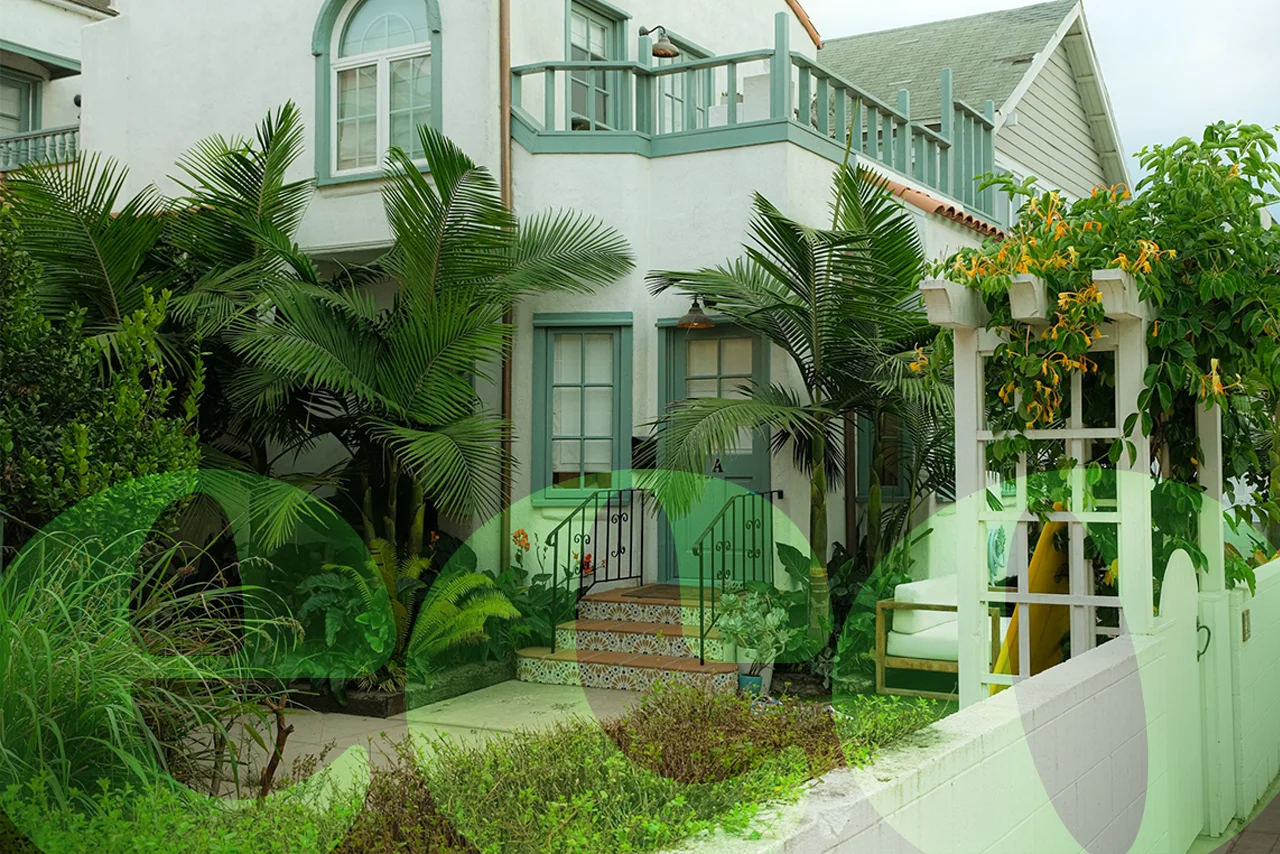
 

A traditional Los Angeles House

The Hidden Problem With Traditional Pressure Washing

Chlorine and bleach-based solutions are the industry default because they cut through mold, algae, and grime almost instantly. What most companies won't mention is what happens after the job is done. Runoff carries those chemicals into garden beds, lawns, and — depending on the property's drainage — into the storm drain system that eventually reaches the ocean.
Los Angeles County isn't uniform on this, either. Each city and district enforces its own rules on water use and what can legally be discharged onto sidewalks and into storm drains.
WHAT'S AT RISK WITH TRADITIONAL CLEANERS

• Pets and kids exposed to chemical residue on surfaces they use daily

• Landscaping and turf damaged by chlorine runoff
• Non-compliance with local water discharge regulations
• Driveway and hardscape discoloration from repeated harsh chemical use

What Eco-Friendly Actually Means

Eco-friendly" gets used loosely in the pressure washing industry, so it's worth knowing what the real standard looks like. The EPA's Safer Choice certification requires every ingredient in a cleaning product to be independently evaluated by EPA scientists — and it's the difference between a company that says it's safe for a family and one that can actually prove it.
WHAT EPA SAFER CHOICE ACTUALLY CHECKS

• Every ingredient evaluated for toxicity to people and pets
• How long chemical lingers before breaking down
• Impact on aquatic life and local waterways
• Real-world performance against mold, algae, and grime
Products certified this way still break down dirt and grime effectively. They don't leave behind the residue that puts pets, kids, and plants at risk.
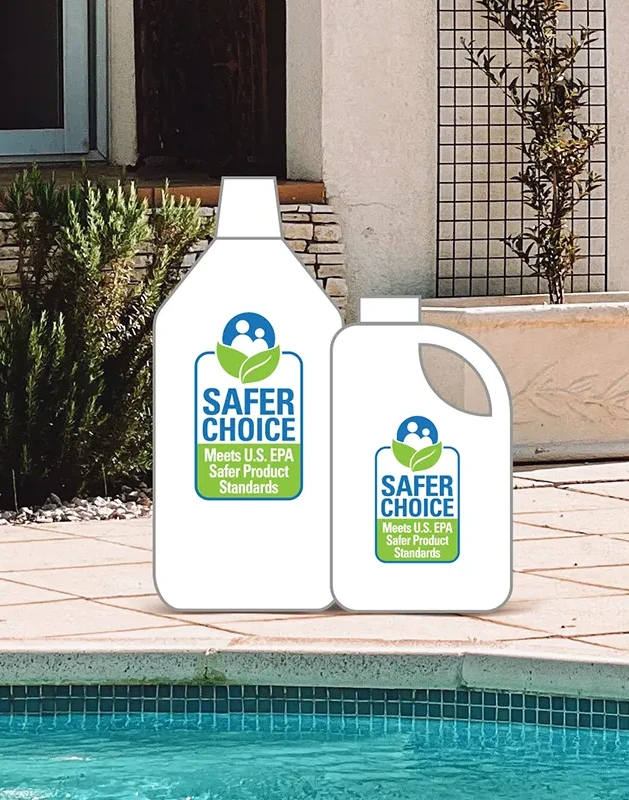
Safer Choice EPA Products

Soft Washing vs. Pressure Washing:
Why Technique Matters as Much as the Product

Even the safest cleaning solution can be undone by the wrong technique. High-pressure water applied to the wrong surface — stucco, painted siding, older wood decking, natural stone — can strip paint, force water behind siding, or erode material that took years to weather naturally. That's an expensive mistake on a luxury estate or a beachfront home, and exactly the kind of damage that shows up during a home inspection down the line.
WHERE EACH METHOD IS USED 

• Pressure washing: concrete driveways, sealed hardscape, sturdy pavers
• Soft washing: siding, stucco, roofing, and other delicate surfaces
• Hand washing: brick, natural stone, and anything too porous for either method above

Brick* is porous enough to trap water and cleaning solution within the material if it's washed too aggressively, which can lead to spalling, discoloration, or mortar breakdown over time—a common and avoidable outcome of hiring a company that doesn't adjust its approach from surface to surface.

Every Surface Gets the Right Treatment

• Driveways and walkways: full pressure, safe on sealed concrete
• Patios, decks, and fences: matched to wood, vinyl, stucco, or wrought iron
• Garden pathways and stepping stones: a solution gentle on nearby grass and plants
• Pool decks and fountain surrounds: extra care so runoff never reaches the water itself
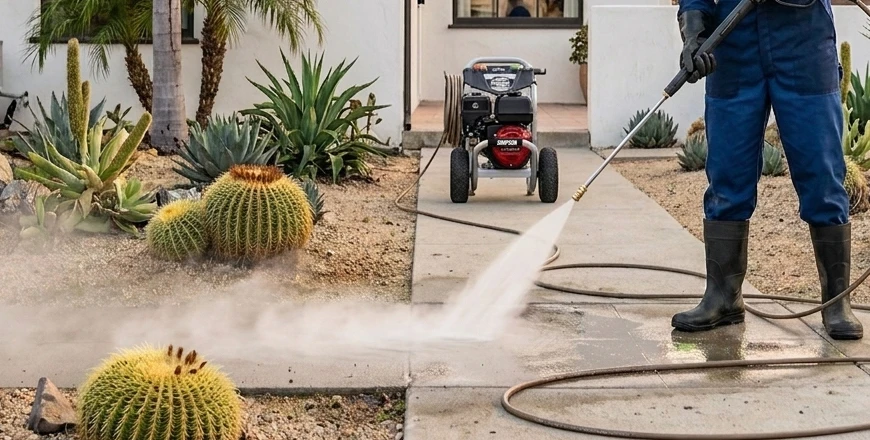
Getting all of this right isn't a nice-to-have. It's what separates a service that restores a property from one that quietly shortens its lifespan.
A worker cleaning a los angeles home with a pressure washer

Why LA Families Are Making the Switch

Put together, the case for eco-friendly pressure washing isn't really about being trendy. It comes down to three things most homeowners already care about:

• Keeping kids and pets safe on the surfaces they play on
• Protecting a landscaping and exterior investment that isn't cheap to replace
• Not quietly contributing to a water and chemical runoff problem that affects the whole community

Put together, the case for eco-friendly pressure washing isn't really about being trendy. It comes down to three things most homeowners already care about:

The result: a genuinely clean home, inside the standard families already expect for everything else on their property.

Junk and Wash was built around that standard from the start. Every job uses EPA Safer Choice–certified products, a soft washing and pressure washing combination matched to a property's actual materials, and water practices that comply with local regulations in every city served — Los Angeles, Beverly Hills, Santa Monica, and Malibu. Learn more about the certification behind the process on the Eco-Mission page, or see the full scope of services on the Residential Pressure Washing page.
Ready to see the difference? call us (323) 217-4796 to talk through what your property needs.

Categories

Calendar

September 2026
M T W T F S S
 123456
78910111213
14151617181920
21222324252627
282930